Iran-Israel War 2026: Latest News & Full Breakdown
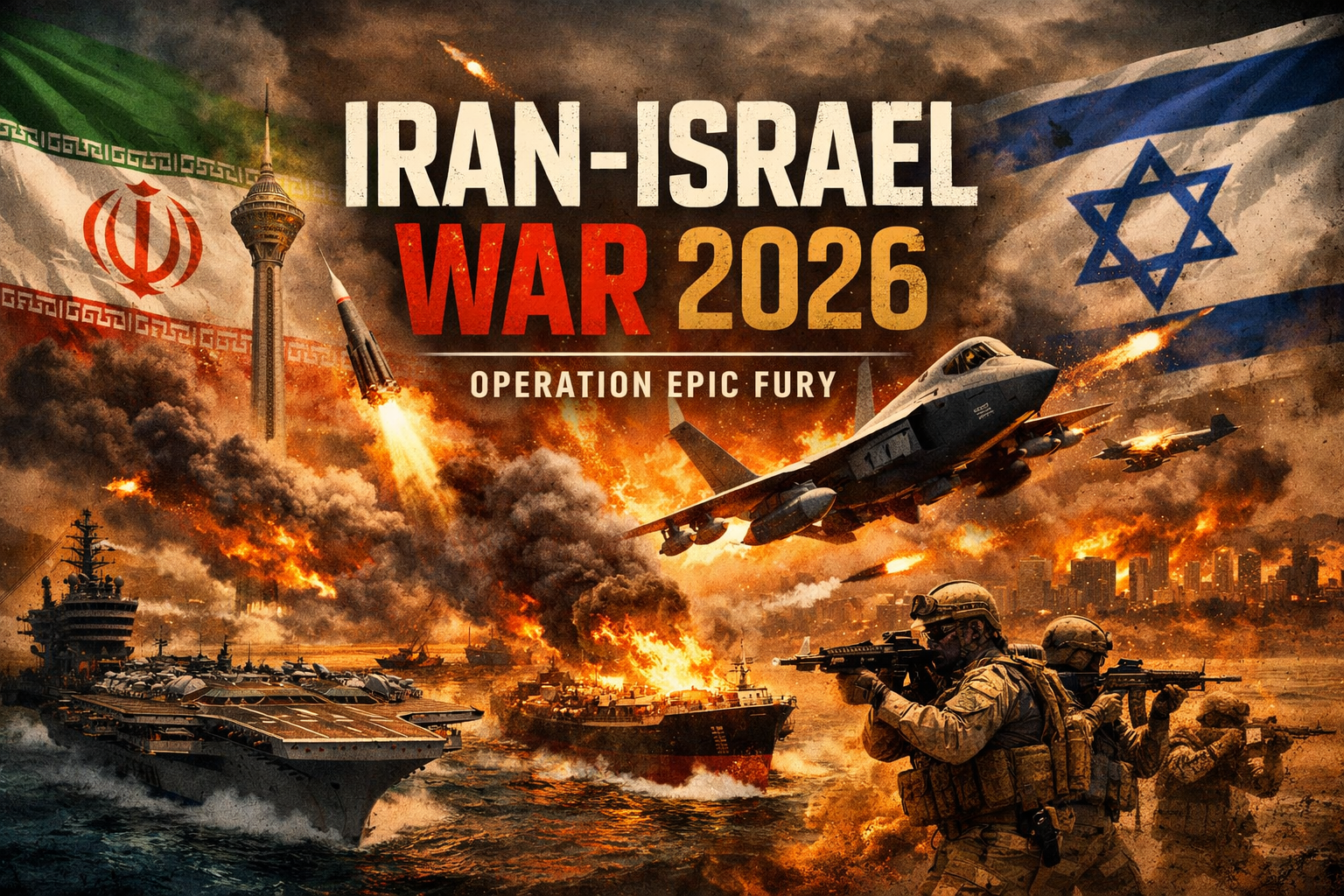
On February 28, 2026, the United States and Israel launched a joint military campaign against Iran called Operation Epic Fury. Within 48 hours, Iran’s Supreme Leader Ali Khamenei was killed, the Strait of Hormuz was effectively shut down, and global oil markets were thrown into chaos. This is not just another Middle East escalation. It is the most consequential regional war in a generation one that could reshape global energy markets, geopolitics, and the world economy. Here’s the full breakdown of what has happened, why it matters, and what comes next. How Did the Iran–Israel War 2026 Start? The immediate trigger was the collapse of nuclear negotiations between Iran and the United States. After months of indirect talks in Geneva, diplomacy failed. On February 28, 2026, the United States and Israel launched coordinated airstrikes under Operation Epic Fury, targeting: Nuclear facilities The deeper roots go back to the October 7, 2023 Hamas attack on Israel and the prolonged Gaza conflict, which intensified tensions between Iran, Israel, and the US. What Is Operation Epic Fury? Operation Epic Fury is the official name for the US-Israeli military campaign launched on February 28, 2026. Israeli Prime Minister Benjamin Netanyahu described it as a mission to: “Create conditions for the Iranian people to control their destiny and free themselves from the regime.” The campaign is significantly larger than previous limited exchanges in 2024 and 2025. It includes airstrikes, cyber operations, intelligence missions, and reported ground infiltration. Day-by-Day Timeline of the War US and Israel begin airstrikes. Over 1,200 munitions dropped across Iran Oil prices surge. Iranian Revolutionary Guard declares the Strait of Hormuz closed. Heavy damage confirmed at the Natanz Nuclear Facility. The killing of Ali Khamenei, Iran’s Supreme Leader since 1989, is historically unprecedented. Possible consequences include: Internal power struggle within Iran Regime collapse is far from guaranteed. The Strait of Hormuz Crisis The Strait of Hormuz is the world’s most critical oil chokepoint. 20 million barrels of oil pass daily 150+ tankers stranded Oil Prices: What Happens Next? Brent crude surged to around $82 per barrel, up roughly 13%. Short-term disruption: manageable due to global stockpiles. Prolonged closure: extremely dangerous. Energy analysts warn: Oil could reach $100–$120 Has Iran’s Nuclear Program Been Destroyed? Strikes heavily damaged the Natanz Nuclear Facility, according to international observers. However: “Significant damage” does not mean total destruction What This War Means for India India is highly exposed. Why? Large portion of crude imports come from Gulf region Petrol & diesel prices increase What This Means for the US, Europe & Asia Not dependent on Middle East oil directly LNG prices rising Highly dependent on Hormuz flows Ceasefire in 2-3 weeks. Strait reopens. Oil stabilizes. 4-8 week conflict. Oil climbs toward $100. Inflation rises globally. Damage to Saudi oil infrastructure. Oil above $120. Global recession likely. Markets currently price Scenario 2 but fear Scenario 3. Frequently Asked Questions The collapse of nuclear negotiations followed by US-Israeli strikes under Operation Epic Fury on February 28, 2026. Not formally blockaded, but effectively closed due to military threats and insurance withdrawal. If the disruption continues, analysts warn oil could reach $100–$120 per barrel. Yes. Iranian state media confirmed the death of Ali Khamenei on February 28, 2026. Higher fuel prices, rising inflation, more expensive flights, and currency pressure.Iran–Israel War 2026: Latest News & Full Breakdown
Military bases
Revolutionary Guard infrastructure
Senior leadership compounds
The operation escalated rapidly when Iranian state media confirmed the death of Ali Khamenei.February 28 - Day 1
Ali Khamenei killed.
Iran launches missile barrages at Israel and US bases.
March 1 - Day 2
First confirmed US casualties reported.
March 2 - Day 3
150+ tankers stranded.
Israeli forces reportedly conduct limited ground operations.
March 3 - Day 4
Iran strikes US diplomatic and military targets in Gulf states.
March 4 - Day 5 (Today)
No ceasefire in sight.
US officials warn the hardest strikes are yet to come.
Global markets remain volatile.
Khamenei’s Death: What Does It Mean?
Increased influence of the Revolutionary Guard
Calls for public uprising
Nationalist backlash strengthening regime unity
While some Western leaders hope this leads to regime change, Iran’s military infrastructure remains operational. Missile launches continue.Why It Matters
20% of global oil supply
20% of global LNG supply
Major route for China, India, Japan, South Korea
Even without a formal blockade, insurance companies have withdrawn war-risk coverage, effectively stopping commercial shipping.Current Impact
80% drop in traffic
Multiple ships damaged
Major shipping companies suspending operations
This is why oil prices are spiking.
Inflation would spike globally
Global recession risk rises sharply
The world can absorb a few weeks of disruption not months.
Iran’s facilities are deeply buried and hardened
Nuclear timeline may be delayed, not eliminated
Experts say it could set Iran back months or years but not permanently erase capability.
Shipping disruption increases cost
USD-INR under pressure
Inflation risk rises
Likely Impacts on Indians
Airfares rise
Imported goods cost more
Stock market volatility
Indian refiners may pivot more aggressively toward Russian crude.United States
But global price shocks affect pump prices
Gasoline expected to rise 10–30 cents
Europe
Competing with Asia for alternative supply
Jet fuel costs increasing
China, Japan, South Korea
Strategic reserves may cushion short-term shock
Long-term disruption is dangerous
What Happens Next? 3 Possible Scenarios1. Swift Resolution (Low Probability)
2. Prolonged Stalemate (Most Likely)
3. Wider Escalation (High Impact Risk)
1. What triggered the Iran–Israel war in 2026?
2. Is the Strait of Hormuz officially closed?
3. How high can oil prices go?
4. Was Khamenei really killed?
5. How does this affect common people in India?
Leave a Reply
Your email address will not be published. Required fields are marked *
Search
Category

.png)